





When I was a child, the kaleidoscope fascinated me. I couldn’t understand how a complex reality unfolding before my eyes could change so much and so quickly. Something like that –though without the magic– happened to us Argentines with the election in the province of Buenos Aires on September 7, which surprised us with an electoral result that neither winners nor losers expected.
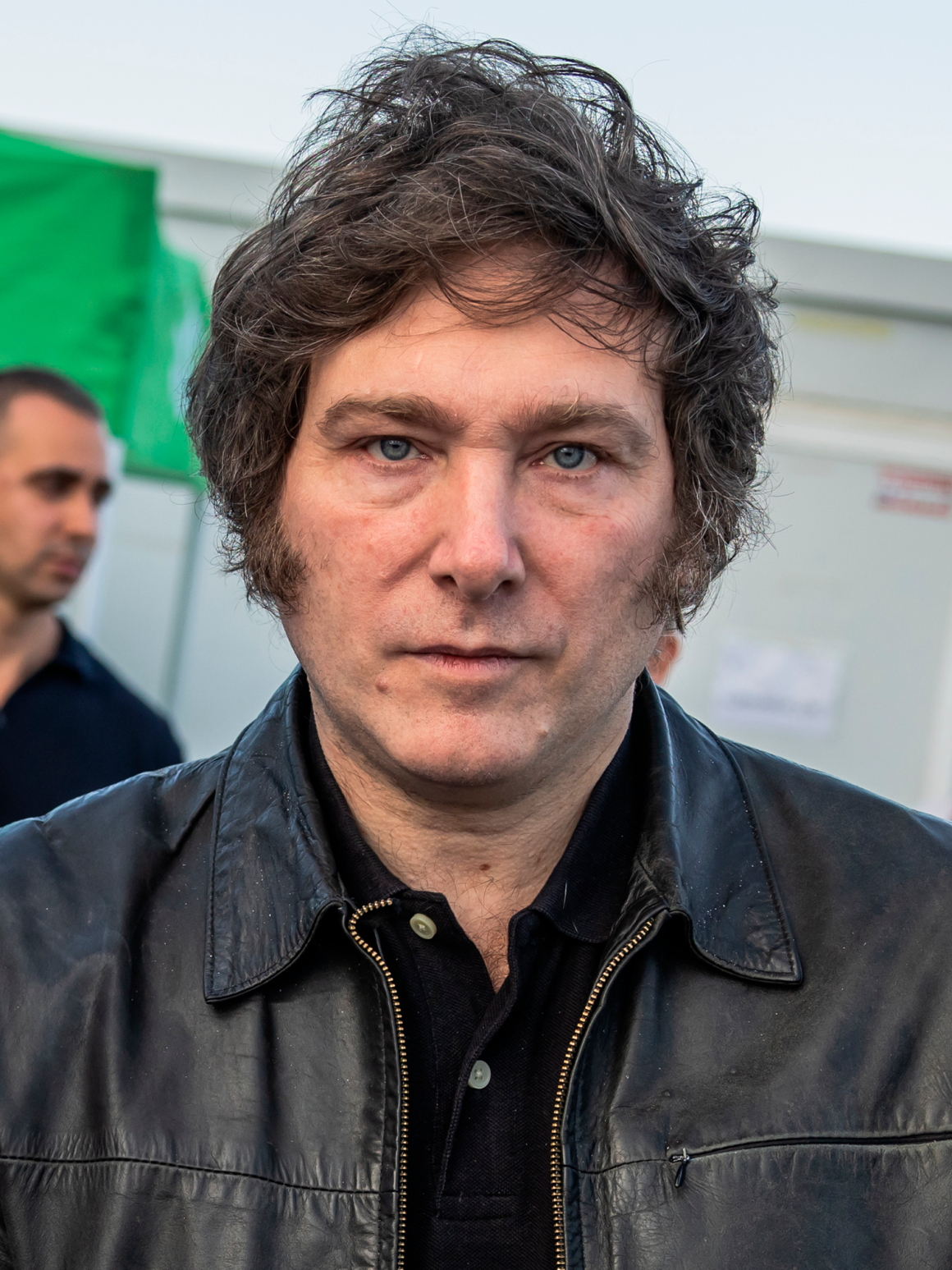
What happened? A ticket from the Kirchnerist Peronists –backed by the former president, now imprisoned for fraudulent administration to the detriment of the state– defeated Javier Milei’s libertarian government by almost 14 points (47.28 to 33.71%). Although it was a provincial election, Buenos Aires, with its 17 million inhabitants, represents more than a third of the country and clearly signals a warning for the upcoming national elections for deputies and senators to be held on October 26.
This reporter spent August in Argentina trying to gauge voting intentions. It was an impossible task if we set aside the predictable votes of the quasi-activists. Many people confessed to having voted for Milei as president but admitted that things were not going well. Would this subtle protest already define a change in vote? Had those who once supported the libertarian at the polls not out of conviction but out of fear –fear that Kirchnerism might win again– lost their terror of what they considered “the worst of the bad”? It seemed difficult to predict. In fact, the polls –yet again, how many times now?– were spectacularly wrong. The supposedly prestigious firm Isasi/Burdman claimed to have collected data as never before: it gave the libertarians a ten-point lead. Others were less wrong, but no one came close to the real figures.
Can we now understand what led Milei to lose the support he had less than two years ago? Intuition leads me to something graphic and not very academic: the slam-door vote. What happens, for example, when someone gets angry, flustered, and leaves a meeting? They slam the door. Something like that happened to millions of Argentines exhausted by Peronist rhetorical lies. That there was a friendly and close state when in truth it was–and is–a state armored against the citizen. That there was an inclusive health system when in truth public healthcare resembled a madhouse. That there were comprehensive social policies when in truth the number of people rummaging through garbage only grew. That the government was for the people when in truth it governed for its own pockets. In response, many opted for the slam-door vote: irritated, they chose the most oppositional candidate, the one who insulted, the one who scorned. Were they voting for a libertarian platform? Possibly not–it was simply about being in opposition.
In nearly two years of Milei’s government, many of the decisions he had announced were implemented, and that must be recognized. He lied little or not at all when he said he was aiming for zero deficit, that he wanted deregulation, that he would close the National Scientific Research Council (he didn’t, but he discredited the entire Social Sciences area), that his foreign policy would align with the United States and Israel. And that, basically, there would no longer be money. As a result, pensions dropped by around 30 percent–in other words, they rose less than inflation–and subsidies for transportation and public services said goodbye.
Does “forewarned is forearmed”? Up to a point. Milei had announced this bundle of measures, but he assured it was to do away with the “caste,” including in that category everyone who took advantage of the state and politics to squander money generated by private initiative. That caste included unions that increased Argentina’s costs with their “conquests,” business organizations that sought protection instead of competitiveness, politicians who lived off their posts and paid favors with public jobs. And so on. But reality showed another side of the coin: most of the adjustment was not paid by the caste but by ordinary people. The government defends itself, somewhat naively, with cheerful numbers: that workers’ and pensioners’ incomes in dollars have gone up like an elevator in the past two years. True. But they forget to say that the prices of food, services, and private healthcare have also gone up–another elevator, also dollarized, but more modern and faster. Ergo, everyone’s purchasing power has decreased.
Some may think it was naive to believe that the caste could shoulder the adjustment. True. But let’s agree that political ideas are not sophisticated but closer to slogans, which many end up believing. And that’s what happened.
The loss of force of the slam-door vote is not the only thing to consider, however. There is another major element running through Milei’s ecosystem: cruelty. Anyone who thinks differently is an idiot, a degenerate, or on the take (receiving envelopes of money to sell themselves to the highest bidder). An example from June 26 this year: “I’m cruel with you (referring to the Kirchnerists), with the spenders, with public employees, with the statists, with those who screw over decent Argentines.” Everyone he dislikes is a mandrill: in the Argentine president’s anal culture, the idea of the sodomized as evil–or perhaps as deserving of punishment–is ever-present. He also dishes out other charming insults such as “rats” or “mental parasites,” always accompanied by gestures of disdain whenever someone ceases to be useful to him–even his own.
He dismissed his first foreign minister, Diana Mondino, in a fit of rage because she voted at the United Nations for a resolution calling for the end of the U.S. embargo on Cuba. According to her, the presidency knew about the vote. No matter: Milei got angry, and she became his enemy. The same happened with his current vice president –a disagreeable woman with strong ties to the vindication of the military repressors of the last dictatorship– whom Milei’s circle calls a traitor, though no one quite explains why. He has also ostentatiously and publicly stopped greeting the mayor of Buenos Aires, supposedly his ally. And the list could go on indefinitely.
At first, people found the insults amusing. It seemed like “truth politics” in a world of plastic speeches and false political correctness. But how long can cruelty be endured? There comes a time when a country demands concord, or at least respect. Doesn’t it grow tiresome–and even seem fake–that the government’s enemies are always infamous and deserve every possible insult? The big question, cynical as it may be, is: does cruelty pay in politics? Or is it just a short-term strategy that eventually backfires?
There’s more. Audio recordings have emerged implicating Milei’s sister–Viceroy Karina–in a corruption scheme. And of course–you can imagine–the blame lies with an operation orchestrated by the opposition. Nothing to review. It also turns out that the candidates put forward in Buenos Aires province were handpicked by a duo controlled by Karina herself, with a juicy Kirchnerist past. Kirchnerist? A mistake? No–just that they changed masters.
This angered the libertarian grassroots. Many –whether mistaken or not– believed in reshuffling the deck and starting anew in Argentina. And they were the first to counterattack in their Twitter battalion when the results became known. The house, friends, is not in order.
There will, of course, be a next chapter. The national elections of October 26. Will Milei change in this month and a half? He said he will do his self-criticism but also assured that he will not modify but rather accelerate his policies. Will the opposition perhaps win people over? Or is this result just a mirage, showing the libertarians that all support has a limit? In a few weeks, the answer.