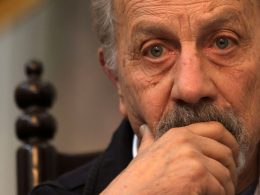









Jordi Canal (1964) is a member of the Center for Historical Research at the Institute of Higher Studies in Paris. As an expert on the history of Spain and his native region of Catalonia, he has published numerous specialized works and made public appearances on the controversial topic of nationalism in Spain. His most recent books, not translated to english, include: Historia mínima de Cataluña (2015); Con permiso de Kafka. El proceso independentista en Cataluña (2018); Dios, Patria, Rey. Carlismo y guerras civiles en España (2023); y Contar España. Una historia contemporánea en doce novelas ( 2024).
Are we living in an age where memory prevails over history, even in the world of universities?
I wouldn’t say that it has prevailed definitively, because that would be too pessimistic, but it is clear that it has displaced history as the main reference point. Until not long ago, history—in its various interpretations—was the framework from which we understood the past. However, since the end of the 20th century, and even more clearly in the 21st, memory has taken its place. This is not necessarily a bad thing, as long as we know how to distinguish between memory and history. Many sectors—some out of ignorance, others out of a lack of reflection, and some deliberately—tend to confuse the two. But they are different things. Memory starts from the present to look at the past; it interprets it from current concerns, values, and sensibilities. History, on the other hand, seeks to understand the past from its own perspective, avoiding anachronisms. From this perspective, we can speak of an abuse of memory. This abuse is transforming the way we see the past. We see it in the controversy over monuments, in public celebrations, in the removal of certain content from textbooks. Anything that does not fit in with present-day values tends to be erased, and memory becomes the instrument used to justify this elimination. And that is dangerous. It is dangerous because whoever controls memory ultimately also controls the narrative of the past. And this control can extend to any sphere. Obviously, this is useful for nationalists, but also for certain populist left-wing movements. In my view, this poses a serious problem for the work of historians. As historians, we must warn that, although memory can be valuable and interesting, its uses can be dangerous.
An example?
Throughout history, every new regime or government —and more frequently in dictatorial contexts— has carried out a “symbolic cleansing”: changing the names of streets and squares, removing monuments. We already knew that. What is worrying today is that this process goes beyond a simple change of regime or government. We are facing a paradigm shift.
The idea has taken hold that we can intervene in history, adding or removing elements according to the values of the present. Thus, the aim is to construct a national history—of Mexico, of any country—without figures such as Christopher Columbus or Hernán Cortés, simply because they are uncomfortable today. We saw this coming: in Mexico, for example, Cortés and Iturbide have no place in the official narrative, displaced by other figures who fit better into the dominant narrative. We have reached a point where certain progressive sectors are seeking to rewrite the past based on an anachronistic memory. Anything that does not fit current values is expelled from history. Another worrying case is that of demands for historical forgiveness, such as those made by the Mexican government to the Spanish Crown. I find this absurd. I understand that it is a political gesture, but when it is justified with historical arguments, we historians have something to say. It is one thing to use myths or fiction in political debate; it is quite another to present them as historical facts. Asking for forgiveness for events that happened 500 years ago is absurd. We are not the same people. Who is responsible today for what happened then? And who should be asked for forgiveness? The Mexicas? The Mayans? The Tlaxcaltecs who supported Cortés? It is a reading completely out of historical context, yet another example of the abuse of memory. This type of discourse has been exploited by some Latin American governments —such as those in Venezuela and Nicaragua— to divert attention from their own problems. Chávez did it, Maduro continues to do it. When there is an internal crisis, they bring up the issue of Spain. Daniel Ortega also tried it at one point. But of course, we are talking about dictatorships.
And in the case of Spain?
In Spain, this is clearly manifested in the so-called Historical Memory Law and Democratic Memory Law, names that, in my opinion, are an aberration. These laws allow names to be removed from streets or monuments simply because their protagonists do not fit in with the sensibilities of the present, even if they had no direct connection with the dictatorship. Excesses have been committed, such as erasing figures for being military or for having ideas considered too conservative. We are, in short, faced with an attempt to construct an idealized history that serves certain political movements. And this involves a constant—and sometimes perverse—use of memory. In the Spanish case, for example, I believe that a law allowing the location and recovery of the bodies of Civil War victims is necessary: every family has the right to know where their dead are. But what has ultimately been included in the Historical Memory Law, and later in the Democratic Memory Law, goes much further. It is about rewriting the past, giving the state the power to decide who was a democrat and who was not, both in the past and in the present. This leads to absurdities such as automatically considering all those who were on the losing side in the Civil War to be democrats, including anarchists and communists. We can debate whether certain sectors of communism today have evolved towards democracy, but it is difficult to argue that the communists of the 1930s were democrats. Giving the state—and commissions with ideological criteria—the power to grant “democracy licenses” is deeply problematic. This creates a narrative of good guys and bad guys, where all those who suffered reprisals under Franco are automatically considered virtuous, which leads to obvious contradictions. But those who promote these policies do not seem to care: their goal is to whitewash the past.
What should be the role of the historian in this context, which is also marked by the rise of nationalism?
On the one hand, through their rigorous and well-founded historiographical work; on the other, through their role as citizens. As citizens, historians can—and I would say must—participate in public debate.
In the 20th century, we spoke of the committed intellectual; today, following the decline of that figure, we must rethink that role. But it is still necessary for historians to speak out when the past is distorted. A clear example is the case of Catalonia: I feel obliged to say that the history taught in Catalan schools is, in many respects, a distorted history. The same is true of the history disseminated by some regional institutions. If someone wants to believe that version, that is their right, but they cannot assume that it is history. It is, rather, a patriotic version constructed with the aim of legitimizing a future Catalan state. Until the late 1980s and early 1990s, Catalonia was a modern society. In a book I wrote about the 1992 Barcelona Olympics, July 25, 1992 (2021), I argue that this event was the last great moment of the open and cosmopolitan Catalonia that could have been but was not. From then on, the dominant nationalism promoted a process of cultural provincialization. I lived in Barcelona at that time, and it was a vibrant, diverse, modern city. But after the Games, nationalism reacted strongly: it was concerned about this image of an open, bilingual, plural Barcelona. And since then, an intense policy of nationalization has been implemented, with measures such as compulsory language immersion in schools and fines for not using Catalan in shops. This process has transformed Catalan society into a more closed, more conservative society, not in the political sense, but in the anthropological sense. It is a society that looks at itself with complacency, that does not want to change, that does not want to share its resources with others, and that considers itself, in a way, superior. In this context, history has been rewritten to fit this identity narrative.
Does this phenomenon occur in other autonomous regions?
The worrying thing is that, unlike other regions such as the Basque Country, where nationalist history is largely kept out of academia, in Catalonia this narrative has penetrated the universities. In the Basque Country, universities continue to teach serious history, while patriotic history is disseminated through other channels. In Catalonia, on the other hand, this mythical history has become the official history, the one taught in schools and universities, and even defended by some prestigious historians who did not do so before. Today, those of us who dare to say that this history is invented—even if the events did occur, but are attributed to entities that never existed, such as a supposed Catalan state—are seen as traitors. And there are very few of us: we could all fit on a small bus. But it needs to be said. In addition, there is a new phenomenon that exacerbates this situation: social media. It is no longer just traditional media—press, radio, television—but digital and streaming platforms that particularly reach young people. And the problem is that nationalist discourse is the only thing they hear. It is in the media, at public celebrations, in schools, in high schools, at university. For many young people, it is the only narrative available. Many of them will probably never read a history book. Social media, with all its advantages, also amplifies this single discourse.
Nationalisms seem to be winning the battle against the narrative of the European Union as a common memory and historical achievement.
In general, what exists in Europe is a sum of national memories. And alongside this, a fundamental question persists: what are the origins of Europe? There is still considerable disagreement on this point. Suffice it to recall the debate that arose during the drafting of the failed European Constitution, where one of the most controversial issues was whether or not to mention the Christian origins of the continent. This debate is not insignificant: it has profound ideological implications, but also practical consequences, as in the case of Turkey’s candidacy for the European Union. Is Turkey part of Europe or not? The answer to that question depends, to a large extent, on how the cultural and historical foundations of the European project are defined. This disagreement is also linked to a broader question: what is the place of Europe—or the West—in world history? In recent times, we have witnessed a growing discrediting of the West, both in America and within Europe itself. Its foundations, values, and legacy are being questioned. And yet, I believe that there are certain elements that are an essential part of our history and cannot be ignored. This does not mean that the issues addressed by decolonial or cultural studies are not important—they undoubtedly are—but we must not lose sight of the fact that there are common cultural foundations that have shaped what we understand as Western civilization. These foundations—such as the Enlightenment, Christianity, and classical culture—must remain present in any serious reflection on our historical identity. It is not a question of excluding other voices, but of not forgetting what has been structural in our collective trajectory.
Reasons to be alarmed about the fate of the European Union?
The European Union is going through a difficult period. There is a general consensus—at least at the institutional level—that without greater integration, Europe risks becoming irrelevant on the international stage. At the same time, however, we are witnessing a resurgence of nationalism within its own borders. France is a clear example: traditional Europeanism has lost strength, and it is not unreasonable to think that, in a few years, the far right could come to power. In Italy, a radical right-wing party is already in power, albeit with a somewhat more moderate profile than its French counterpart. In Germany, the far right is also growing. And in Eastern European countries such as Hungary, Poland, and Romania, populist governments predominate, many of which show more affinity with Russia than with the founding values of the Union. Viktor Orbán in Hungary is a case in point. In this context, it is difficult to imagine that the European Union will be able to move towards greater unification in the short term. Added to this is a third key factor: the lack of leadership. For decades, Europe was held together by the Franco-German axis. Today, that axis is virtually broken. Germany, which for a long time was the continent’s most stable economic and political pillar, is now experiencing its own internal difficulties. France, for its part, has weak leadership. Despite Emmanuel Macron’s attempts to project influence—visiting Putin, intervening in international conflicts, proposing reforms—his real leadership capacity is limited, both by his low domestic popularity and by the fact that France no longer occupies the geopolitical position it held 50 or 100 years ago. Added to this is the departure of the United Kingdom, which has left the Union without one of its main players. And, of course, there is the role of NATO, which conditions many strategic decisions. For example, Spain has been reluctant to increase its military spending, creating tensions within the alliance. In short, I am pessimistic about the immediate future of the European Union. It has made many mistakes and has become an overly bureaucratic structure, incapable of generating a real sense of belonging or building a solid European narrative. It has failed to respond to contemporary challenges or to create a Europeanism that mobilizes its citizens.