








Science fiction is an increasingly problematic and imprecise term for the peculiar, mutant creature it seeks to name. Adolfo Bioy Casares—who cultivated the genre in works such as The Invention of Morel, Plan of Escape, and De un mundo a otro (no English translation)—preferred to call it “reasoned imagination”. We are talking about one of the expressions of the literature of the unusual, specifically the expression that offers us a strange reality. This reality can be presented either 25 minutes into the future (as Ballard favored in science fiction), or a long time ago in a galaxy far, far away, or in an alternate (or possible) present just a couple of centimeters away from the one we currently inhabit.
Darko Suvin asserts that in so-called science fiction, the reader’s implicit agreement relies on a dual process of cognition and estrangement. In this process, the sudden appearance of the fantastic element within the fabric of reality is justified by means of a novum. That is, there is a mechanism, element, artifact, trigger, or reasoned excuse that gives rise to the speculative fiction we encounter. Thus, the science fiction reader is able to identify: “This is not reality, but it could (become) so”. In so-called hard Anglo-Saxon science fiction, the novum‘s presence is clear and often scientifically supported. The novum in Latin American science fiction, however, tends to be more hidden, subtle, and masked. It is as if on this side of the continent, the novum, instead of being a technological factor, tends to result from an alteration of the natural world. It is an element of the earth that has spiraled out of control—sometimes due to scarcity or even absence, other times due to overabundance. And that strange earth, logically, also alters the beings that inhabit it. The transformed environment causes a metamorphosis in its residents. This is a telluric science fiction, closely linked to the landscape, rooted in original myths, and tied to the very particular geographical and cultural characteristics of these lands.
Let us imagine, for example, an Argentina where cattle have been infected by a virus and are no longer fit for human consumption. The government then protects meat-eaters by authorizing, through law, the breeding of genetically manipulated humans (a sort of Epsilon from Brave New World, but specifically for fattening) whose meat replaces beef on the table. In this context of regulated anthropophagy, we meet a meatpacking plant employee—of the new meat, of course—who becomes romantically involved with a “head” of human cattle. This is the premise upon which Agustina Bazterrica’s Cadáver exquisito (2017) is built.
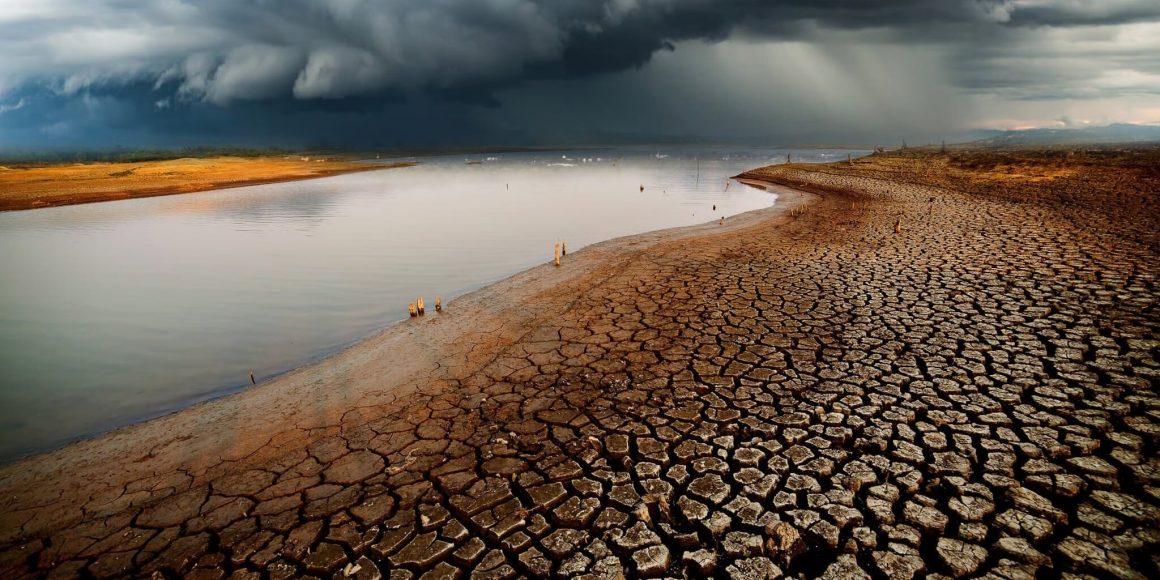
With Las indignas (2023), Bazterrica once again explores the dystopian theme. We find ourselves in a world ravaged by wars over water, where environmental pollution is extreme. With the dissolution of the social contract, the Rousseauian noble savage disappears and is replaced by a Hobbesian predator. In this ravaged land, man, more than ever, becomes a wolf to other men. In the post-apocalyptic setting of Las indignas, a group of female survivors confined to the House of the Holy Brotherhood endure what is a true dystopia: an obscurantist and repressive Middle Ages—a kind of new Inquisition—now presented to us in the guise of tomorrow.
The stories collected in Ustedes brillan en lo oscuro (2022), by Bolivian author Liliana Colanzi, also introduce us to the subgenre of Climate Fiction (Cli-Fi). Is atomic dystopia the same in El Alto as it is in New York or Chernobyl? The author of these formidable stories shows us that it is not. The landscape of the highlands is different, as are the myths that fuel the fantasies and fears in this part of the world. Crucially, its inhabitants will be very different when the nuclear accident occurs tomorrow “because they were contaminated with that thing, that thing that was smaller than a grain of sand and made of fire”. Colanzi sensitively and vividly unfolds a post-apocalyptic scenario loaded with new colors, textures, and creatures, along with different ways of perceiving, feeling, and understanding them. Liliana Colanzi’s climate fiction has a familiar, even beautiful and humorous approach, which makes it especially disturbing.
The case of Luis Fraga Lo Curto’s novel Carne nueva (2023) also merits attention within Latin American climate science fiction. The Venezuela of the future has been rebuilt through exuberant, artificially manipulated nature. Urban space in Carne nueva has practically disappeared; we inhabit a country of jungle. The future proposed by Fraga is a setting dominated by hyper-voluptuous, enormous vegetation, featuring colossal trees similar to brutalist skyscrapers. This jungle context is inhabited by feral people, also modified by genetic interventions, who move among the vines. This is literally Venezuelan biopunk to the core, especially since the plot revolves around the discovery of a hip bone belonging to María Lionza, which will be used to clone her. In Carne nueva, the artificial is the natural. It is a humanity whose evolution lies in amplifying the qualities of the wild.
In the reasoned imagination of Latin America, it is more likely that in the future we will not merge with machines so much to become cyborgs, but rather with the DNA of the condor or the jaguar. Following the paths of biopunk, yet elegantly avoiding the subgenre’s clichés, we encounter La sincronía del tacto (2021), by Mexican Gabriela Damián Miravete. In this work, the consumption of a flower—as if it were a mutant hallucinogenic mushroom—enables the traveler to bend time and space, while redefining the concept of language and even forms of communication (now closer to the transmission of information by mycelium). Damián Miravete points out that the real wormhole for traversing space-time folds is language.
As Burroughs rightly suggested: “Language is a virus from outer space”. Similarly to what we saw in the film The Arrival, inspired by Ted Chiang’s tale Story of Your Life, language in La sincronía del tacto determines a new perception of time and space. It creates a total form of communication beyond the limitations of words. It also offers a different way of conceiving and narrating ourselves: if we found another language—a more quantum one, capable of moving through the fabric of time-space, merging the future with the past and the here with the there—we would be dissolving the linearity established in the transition from birth to life to death.
The works mentioned here by Bazterrica, Colanzi, Damián Miravete, and Fraga Lo Curto—although very different from each other—emphasize a curious Latin American Cli-Fi/biopunk in which an element of our nature runs rampant. Its absence, scarcity, metamorphosis, or exaggerated presence has changed the landscape, both external and internal. We must adapt or accept extermination. But if there is one thing we know how to do on this side of the world, it is to find a way to survive. Once again, we will have to mutate, evolve, and earn the right to exist on this, our land, which is so familiar and yet so profoundly strange.